
Presentation of a long-term study on sound localization ability in newly implanted cochlear implant users with different modalities
Sarah Lewits 1Max Blümer 1
Alexander Elsholz 1
Katharina Schmidt 2
Mark Praetorius 1
1 University Medical Center Hamburg-Eppendorf, Department of Otorhinolaryngology, Hamburg, Germany
2 Jade University of Applied Sciences, Institute for Hearing Technology and Audiology, Oldenburg, Germany
Abstract
This prospective long-term study investigates the development of sound localization, speech recognition, and self-perceived hearing in adult cochlear implant (CI) users during rehabilitation. Data is collected over a twelve-month period using the “Erfassung des Richtungshörens bei Kindern (ERKI)” system (Auritec, Hamburg, Germany), the Freiburg monosyllabic test, and the “Speech Spatial Qualities Questionnaire (SSQ12)”. Initial results show significant improvements in sound localization after eight and twelve months, and in speech recognition after four and twelve months. In contrast, subjective hearing perception remains largely unchanged. So far, no significant correlation has been found between patients’ subjective assessments and their audiological outcomes.
Objective
Sound localization in the horizontal plane relies on the processing of interaural cues, particularly interaural time differences (ITDs) and interaural level differences (ILDs). In CI users, the ability to use ITDs is severely limited. This is mainly caused by processing strategies, as well as differences between electrical and physiological acoustic stimulation, which results in a considerable loss of temporal fine structure [1], [2]. Consequently, CI users rely heavily on ILDs for sound source localization.
The aim of this long-term study is to systematically document the progression of localization performance, speech recognition, and self-perceived hearing in adult CI patients during rehabilitation. Additionally, the study seeks to analyze the interrelations between these domains.
Methods
Data collection begins two weeks after the initial fitting and is conducted at fixed intervals of two, four, eight, and twelve months. Localization ability is assessed using the “Erfassung des Richtungshörens bei Kindern (ERKI)-System” [3]. The ERKI setup consists of a modified MAINZER Kindertisch with 32 virtual and 5 real sound sources arranged in a semicircle. In this study, the horizontal localization range of ±75° is examined in 5° increments. A 300 ms segment of the ISTS speech signal /alors/ (70 dB SPL, ±3 dB level roving) is used as the auditory stimulus and is presented in five separate trials at each angle point.
Speech recognition is assessed using the Freiburg Monosyllabic Test at a stimulus level of 65 dB SPL. Subjective hearing ability is evaluated using the “Speech Spatial Qualities Questionnaire (SSQ12)”, which includes the subscales “Speech”, “Spatial”, and “Qualities” [4], [5]. Exclusion criteria include deafness in the contralateral ear as well as psychiatric or neurological disorders.
Data collection for the study is still ongoing. Preliminary analysis is based on data from twelve adult patients, seven bimodal, three with single-sided deafness, and two with bilateral cochlear implants, who have completed the study. A total of 48 completed SSQ12 questionnaires and 51 test runs of the Freiburg test and localization tests were evaluated. Statistical analysis was performed using IBM SPSS Statistics (Version 29.0.2.0, IBM Corp., Armonk, NY, USA) with generalized linear mixed models (GLMM). The significance level was set at p<0.05.
Results
Compared to data collected two weeks after initial fitting, a significant reduction in root mean square error (RMSE) for localization was observed after eight months (t(36)=–3.114, p=0.033) and twelve months (t(35)=–3.432, p=0.016) (Figure 1 [Fig. 1]). Monosyllabic speech recognition significantly improved after four months (t(36)=3.334, p=0.018) and twelve months (t(36)=3.596, p=0.010) (Figure 2 [Fig. 2]). However, total SSQ12 scores did not show significant changes after twelve months (t(32)=2.143, p=0.398), nor did the subscales “Speech” (t(32)=0.684, p=1.000) and “Qualities” (t(32)=1.057, p=1.000). The “Spatial” subscale showed a value near statistical significance (t(32)=2.974, p=0.055) (Figure 3 [Fig. 3]). No significant correlation has been found thus far between localization performance, speech recognition, and subjective hearing perception (Table 1 [Tab. 1]).
Figure 1: Root mean square error (RMSE) of sound source localization over the months. Measured using the “Erfassen des Richtungshören bei Kindern (ERKI)” system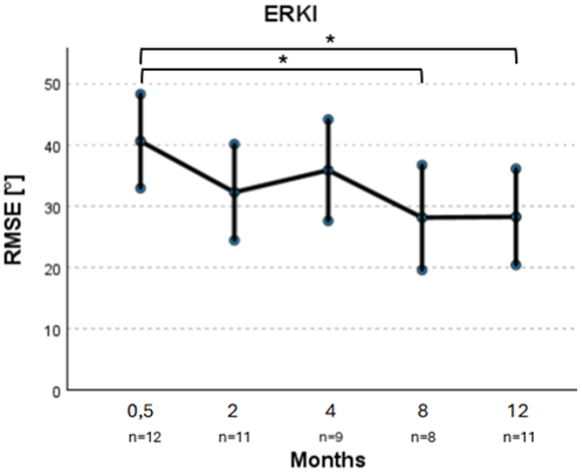
Figure 2: Word recognition performance over the months in the Freiburg monosyllabic test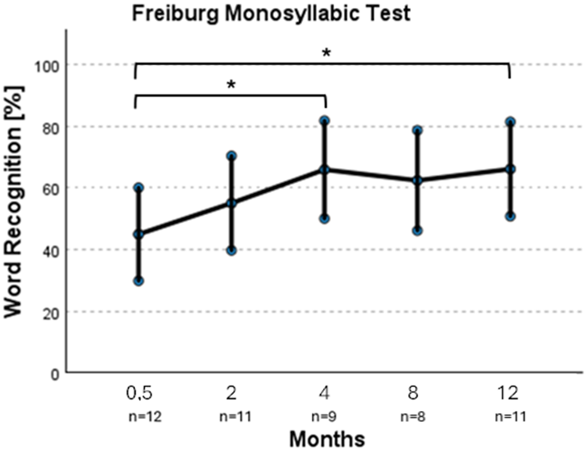
Figure 3: Results of the “Speech Spatial Qualities Questionnaire” (SSQ12) over the months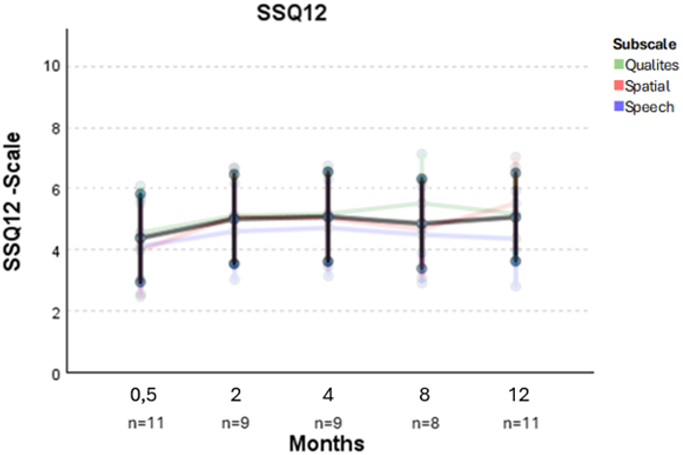
Table 1: Pearsons-Correlation Analysis at different points in time. r=0.0<0.1 (non), r=0.1<0.3 (low), r=0,3<0,5 (moderate)
Discussion
Localization ability showed both intra- and interindividual variability during the course of the study, and not all participants showed improvements. No clear correlation was observed between subjective perception and audiological test results: while significant improvements were demonstrated in both speech recognition and localisation, subjective ratings remained largely stable over time following the initial increase observed at the two-month interval. The development of speech recognition aligns with previous studies, particularly reflecting the typical “restoration period” in the early rehabilitation phase, during which an initial performance increase is observed [6].
Further analyses with a larger sample size are planned to validate current findings and provide more detailed insights.
Notes
Conference presentation
This contribution was presented at the 27th Annual Conference of the German Society of Audiology and published as an abstract [7].
Competing interests
The authors declare that they have no competing interests.
References
[1] Aronoff JM, Yoon YS, Freed DJ, Vermiglio AJ, Pal I, Soli SD. The use of interaural time and level difference cues by bilateral cochlear implant users. J Acoust Soc Am. 2010 Mar;127(3):EL87-92. DOI: 10.1121/1.3298451[2] Zirn S, Angermeier J, Arndt S, Aschendorff A, Wesarg T. Reducing the Device Delay Mismatch Can Improve Sound Localization in Bimodal Cochlear Implant/Hearing-Aid Users. Trends Hear. 2019 Jan-Dec;23:2331216519843876. DOI: 10.1177/2331216519843876
[3] Plotz K, Schmidt K. Lokalisation realer und virtueller Schallquellen mit einem automatisierten Erweiterungsmodul am Mainzer-Kindertisch. Z Audiol. 2017;56(1):6-18.
[4] Noble W, Jensen NS, Naylor G, Bhullar N, Akeroyd MA. A short form of the Speech, Spatial and Qualities of Hearing scale suitable for clinical use: the SSQ12. Int J Audiol. 2013 Jun;52(6):409-12. DOI: 10.3109/14992027.2013.781278
[5] Cañete O. The 12-item Speech, Spatial and Qualities of Hearing Scale questionnaire: administration suggestions and guidance. Auditio. 2023;7:e0094.
[6] Hoth S. Der Nutzen von Verlaufsdiagrammen nach der Versorgung mit Cochlea-Implantat. Z Audiol. 2020;59(1):16-9.
[7] Lewits S, Blümer M, Elsholz A, Schmidt K, Praetorius M. Vorstellung einer Langzeitstudie zur Erhebung der Lokalisationsfähigkeit bei neuimplantierten CI-Träger:innen mit verschiedenen Versorgungsformen. In: Deutsche Gesellschaft für Audiologie e. V.; ADANO, editors. 27. Jahrestagung der Deutschen Gesellschaft für Audiologie und Arbeitstagung der Arbeitsgemeinschaft Deutschsprachiger Audiologen, Neurootologen und Otologen. Göttingen, 19.-21.03.2025. Düsseldorf: German Medical Science GMS Publishing House; 2025. Doc211. DOI: 10/3205/25dga214